Rodrick Covington, whose most recent Broadway credit was Papa Ge in the Tony Award Winning Revival of Once On This Island, will be hosting, with his company Core Rhythm Fitness, a powerful Virtual Fitness Fundraising event to benefit the Black Lives Matter Movement.
Read on for some recent theatre headlines and videos you may have missed.
Marsha Mason and Brian Cox in Dear Liar Oscar nominee Marsha Mason (Broadway’s Steel Magnolias) and Emmy winner Brian Cox (Broadway’s The Great Society) will pair up for a virtual benefit reading of Jerome Kilty’s Dear Liar. Mark Brokaw (How I Learned to Drive) will direct the play about George Bernard Shaw and his muse “Mrs. Pat,” presented by Bucks County Playhouse. The reading will take place September 1 at 7 PM EST, with advanced tickets priced at $25 ($35 day of). Proceeds will go to the Bucks County Playhouse Pandemic Campaign.
A Tribute to Nick Cordero Cast members from the 2015 Off-Broadway musical Brooklynite assembled remotely to honor their late co-star Nick Cordero, who died due to complications from COVID-19 last month. Watch Matt Doyle, Nicolette Robinson, Ann Harada, John-Michael Lyles, Manik Choski, Remy Zaken, Grace McLean, Andrew Call, Gerard Canonico, Carla Duren, Max Chernin, Alex Boniello, and Tom Alan Robbins—plus composer Peter Lerman on guitar—perform the show’s “Rescue Waltz” below.
HVSF Goes Virtual The Hudson Valley Shakespeare Festival will bring its annual HVSF2 Reading Series online this year, with three titles streaming via Vimeo (with a suggested donation of $20 per viewer). The lineup includes Will Power’s Seize the King directed by Jesse J. Perez(August 13), Erin Shields’ adaptation of Paradise Lost directed by Sara Holdren and featuring Nance Williamson (August 20), and Untitled Agatha Project, an HVSF commission from writer Heidi Armbruster and director Lavina Jadhwani (August 27). All streams will take place at 7:30 PM ET.
Concert Venues Unite Joe’s Pub, Le Poisson Rouge, SubCulture NY, The Town Hall, United Palace, and over 100 more performing arts venues in New York City have formed the New York Independent Venue Association in response to the financial strain many are facing due to the COVID-19 pandemic. The group, associated with the National Independent Venue Association, is pushing for the Save our Stages and Restart Acts to be passed in Congress.
A Taste of Sleepless Check out a new video from the upcoming musical Sleepless, based on Sleepless in Seattle. In the clip, Kimberly Walsh, who stars as Annie, sings the song “Outta My Hands” from Robert Scott and Brendan Cull’s score. Performances are due to begin August 25 at Troubadour Wembley Park Theatre, with a socially distanced indoor configuration and with the implementation of new COVID-19 testing technology.
On June 29, The Broadway League announced that Broadway theatres will remain dark through at least January 3, 2021, an extension from the previously slated September re-opening. As the hiatus—which officially began March 12 as mandated by Governor Andrew Cuomo—continues, we’re keeping an eye on how the extended closures impacts shows.
Below is a list of shutterings, postponements, cancellations, and scheduling updates.
August 3, 2020 Sing Street STATUS: Postponed Scheduled for a March 26, 2020, opening, the Off-Broadway musical transfer announced that it is now eyeing a premiere in the 2021-2022 season.
The rest listed in alphabetical order:
Birthday Candles STATUS: Postponed Noah Haidle’s play, starring Debra Messing and presented by Roundabout Theatre Company, was scheduled to begin previews April 2. Following an initial postponement, to this fall, the production is now scheduled to open in the fall of 2021 at the American Airlines Theatre. Exact new dates for the Vivienne Benesch-helmed production will be announced later.
Caroline, or Change STATUS: Postponed The Broadway revival of Jeanine Tesori and Tony Kushner’s musical, starring Olivier winner Sharon D. Clarke, was originally set to begin previews at Studio 54 March 13. The Roundabout Theatre Company production is currently scheduled to open in spring 2021 at a date to be announced.
Flying Over Sunset STATUS: Postponed The Lincoln Center Theater premiere was postponed on the date of its first preview, with a planned return for the fall initially announced. The new musical by director James Lapine, composer Tom Kitt, and lyricist Michael Korie, is now scheduled to open in Spring 2021 at a date to be announced.
How I Learned to Drive STATUS: Postponed Paula Vogel’s Pulitzer-winning drama has been postponed; Manhattan Theatre Club aims to present the play on Broadway as part of its 2020–2021 season. The revival was scheduled to begin March 27 at the Samuel J. Friedman Theatre, reuniting original director Mark Brokaw, and stars Mary-Louise Parker and David Morse.
MJ STATUS: Postponed MJ, the Michael Jackson bio-musical produced by Lia Vollack and the namesake artist’s estate, will now begin performances March 8, 2021, at the Neil Simon Theatre, with opening night scheduled for April 15. The production was scheduled to start previews July 6 at the venue this summer and open August 13.
The Music Man STATUS: Postponed The Scott Rudin revival of The Music Man, starring Hugh Jackman and Sutton Foster, has pushed back its opening. Originally slated to begin in the fall (previews were scheduled for September 9 ahead of an October 15 opening), the production now aims to begin April 7, 2021, at Broadway’s Winter Garden Theatre, with opening night set for May 20. Jerry Zaks will direct, with choreography by Warren Carlyle.
Plaza Suite STATUS: Postponed The revival starring Sarah Jessica Parker and Matthew Broderick, was scheduled to begin March 13 at the Hudson Theatre ahead of an April 13 opening. The production will now run March 19, 2021, through July 18 at the Hudson Theatre.
“I’ve always loved how you have to be responsible for your own imagination in the podcast play format,” says Iyvon Edebiri, artistic director and host of The Parsnip Ship. For Edebiri, audio theatre—which is currently having a moment in the spotlight—has long been the go-to.
“In a theatre production, the interpretation of the world is given to you. Audio theatre forces you to really engage with the imagination in a way a lot of theatre makers and audiences don’t really get to do.”
Iyvon Edebiri Sammy Tunis
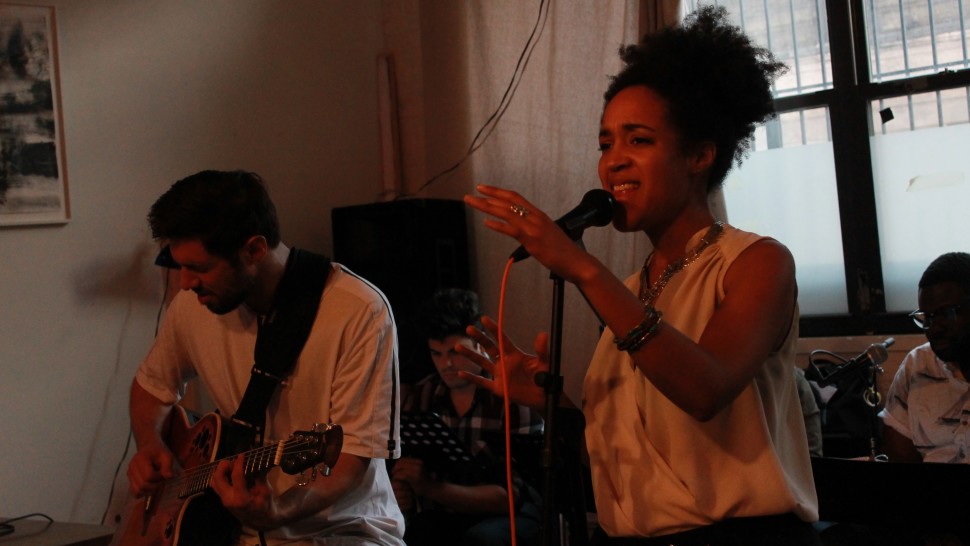
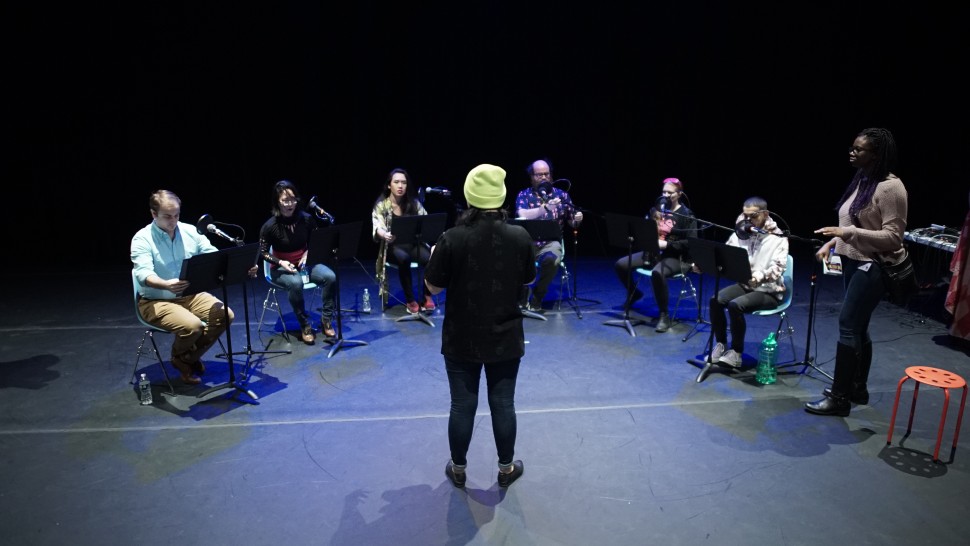
Now in its fifth season, The Parsnip Ship has been showcasing bold new plays by emerging and established playwrights—with a focus on underproduced and underrepresented voices—since 2015. Featuring live music by local artists and recorded live with an audience in Brooklyn, each episode of The Parsnip Ship re-imagines the concept of the radio play with stories that explode notions of form and content.
We chat with Edebiri about building the platform and a community of artists over the years, shifting to live play broadcasts during COVID, digital community events, and more.
How do you find your plays and playwrights? Talk me through the submission process. Iyvon Edebiri: We have an annual spring submissions process that specifically calls for playwrights who identify with a specific demographic that is still underproduced and underrepresented in the American theatre. Season 4 was all playwrights of color, Season 5 (interrupted due to COVID-19) is all womxn+/non binary femme playwrights and Season 6, which we’re in the process of evaluating, is all Queer playwrights.
We’re very specific about who we want to highlight on our platform. Our submissions process is done in two rounds: The first round asks the playwright to submit their first 15 pages and, if invited for the second round, we give the play a full read. This is a mostly decentralized and democratic process as I invite trusted theatre makers into the selection process to ensure an array of perspectives—since theatre and text are so subjective. It’s also important to me that decisions on our season curation aren’t through the lens of the demographic in power. So for Season 6 submissions (Queer storytellers), the first round was evaluated by all Queer theatre makers, while the second round will be evaluated by a majority Queer group of readers. As a cis-hetero woman who really wants to make sure our Season 6 artists already feel cared for once they apply, it was important for me to step back from the Round One read to ensure it wasn’t colored by a straight gaze and that the samples themselves were vetted by folx in the Queer community. It’s really at Round Two where we discuss the merits of the play in their entirety, as well as how it could be re-crafted as an audio play. The most important question we ask is: What would the world be missing if it didn’t have this play?
What was the driving impetus behind launching the podcast in 2015? The original thought behind Parsnip was simply to record plays and music in a living room. I think we spent a few weeks thinking about it and how we could launch it. Once we had a more concrete idea, it was finding a play to record. I reached out to playwright Jose Rivera (I was part of his writer’s group) and asked if this was something he’d be interested in. Jose said yes and allowed us to record his play School of the Americas—we officially were able to launch.
What was something early that led you to say to yourself: I have to continue making this podcast? I realized that I genuinely have a fun time making these episodes and connecting with artists. And once I understood the power of this platform and how it could be an innovative way for playwrights to showcase their works, I really leaned into making sure the platform was a reflection of my theatre community.
What would you say was the biggest learning curve from those early productions?
The biggest learning curve was formulating the structure of our live episode so it transferred well to a fully realized audio recording of this experience of a radio play. So the earlier episodes you’ll hear how we experimented with the order of the evening. The other major thing learned is that it’s so incredibly helpful to have an actual sound person who is proficient at live engineering and can work with artists to get them comfortable for the recording of the episodes.
Talk to me about the kind of community that The Parsnip Ship has fostered over the years? We have fostered an awesome community that is essential to how we work and how we continue to build our platform as a resource. Over the last five years we’ve worked with 350-plus artists (playwrights, directors, musicians and actors) who have contributed to our platform. Sometimes collaborators already know each other and it’s a fun project to do together, and sometimes collaborators don’t know each other and we have to curate an episode in its entirety. Both have led to awesome artistic relationships; we see folx work on other projects with someone they met through Parsnip and that’s such an awesome feeling— knowing they connected through our platform.
In January, we hosted our first Parsnip Pop-Up, which was a drop-in brunch time writing with waffles session that was free for anyone to come to. Since we knew we weren’t able to gather in the immediate future, we decided to revamp the in-person Pop Up for the digital space and provide a weekly space for creatives to create community in an “accountability-lite” way. We’ve been fortunate to partner with other small orgs and collectives around the country whose missions align with our own to invite creatives from all over to join us.
Since our live episode recordings are on hold, we’ve been re-purposing our episodes for the digital space by doing weekly live radio play broadcasts on Facebook. These are a modern take on the radio-play concept of folx listening to a piece together but separate. And with Facebook’s chat function, folx are able to react and connect with other folx tuning in.
Diane Chen (center) and Iyvon Edebiri (right) during pre-show for The Last Ring Business Lunch Productions
Theatres are shut for the foreseeable future. Have you found there to be increased interest in the podcast play format, and by that same token, in The Parsnip Ship? Certainly! We’re seeing an influx of audio theatre and institutions buying into the idea as a way to give artists work and sustain audience engagement. For Parsnip specifically, we’ve seen a jump in our social media followers, engagement and folx emailing to inquire about how to get involved with us. I think what excites folx specifically is that we aren’t interested in maintaining the status quo or creating a special club of playwrights to produce. We’re really invested in the idea that this format should be, and can be, accessible,as much as it is intersectional in its artistic collaborators.
The Parsnip Ship isn’t the only thing you’ve got going on. Tell me how do you balance running the podcast with all of your other projects and roles? I have been fortunate over the last year to be able to work with and for organizations who understand that Parsnip is incredibly important to me. It’s been nice being able to work around the needs of Parsnip, while still being able to have income coming in. Before COVID-19, a lot of my time was focused on producing and company management, but now there are no companies to manage, sadly. But fortunately, I’ve been able to lean into my skills as a dramaturg during this time and that’s been really rewarding and nice to shift my focus to supporting playwrights in a more focused and text-based way.
What is something that drives you to continue making theatre in this world? I can’t go one day without hearing, reading, feeling, or experiencing a story, so what better way to spend my days than supporting storytellers?
The Parsnip Ship’s company’s team also includes Katy Donnelly, managing director, Todd Kirkland, digital operations director, Al Parker, artistic associate, Charlie Madison, development director, and Jesse Manning, consulting producer. The podcastis now available on iTunes, Spotify, and other podcast platforms, alongside all previous seasons.